
Waterfalls and Moving Water: Creating Powerful Landscape Photographs
Oct 10, 2026
By Artistic Creationz Photography
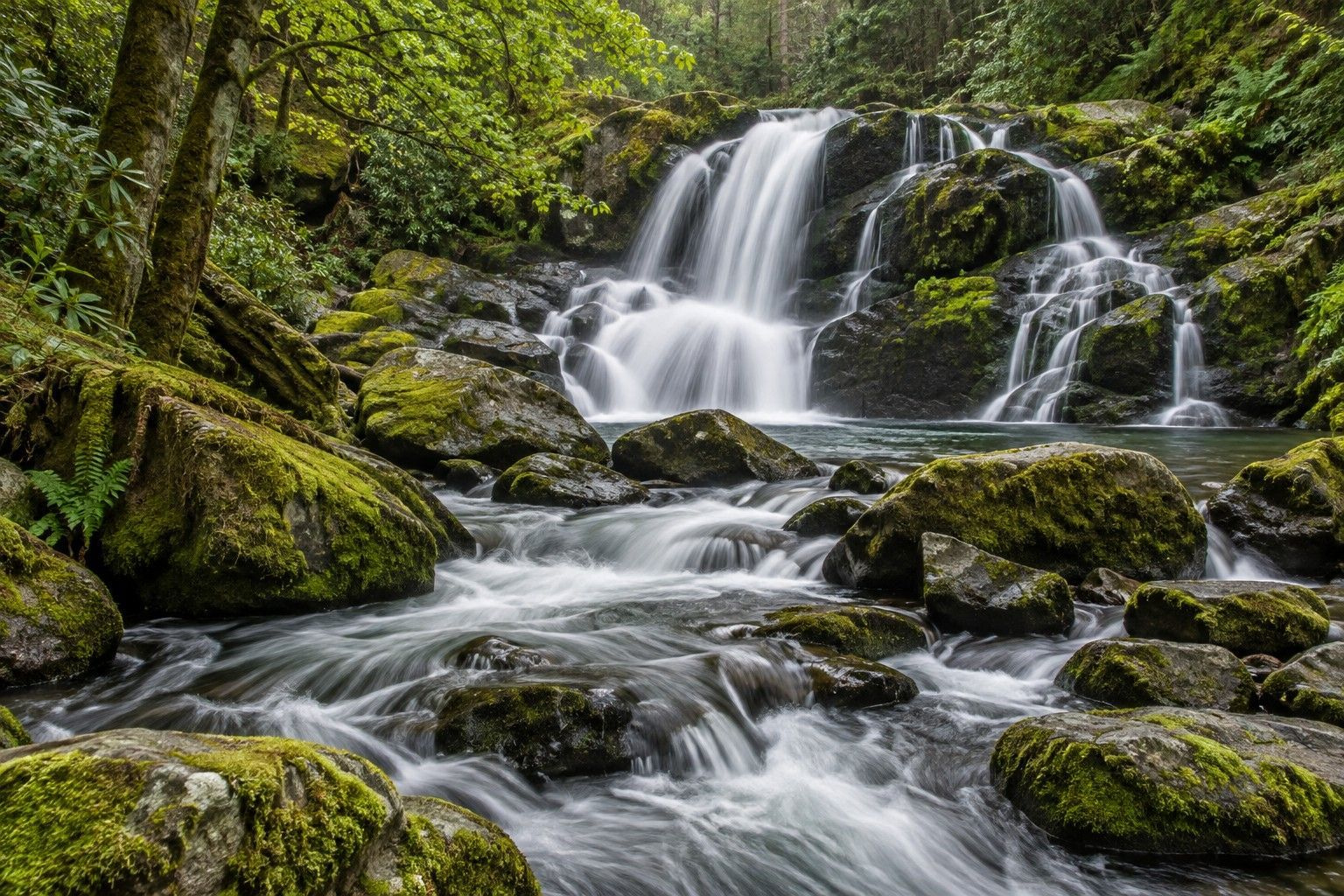
Waterfall and moving-water photography becomes more expressive when shutter speed follows a visual intention. A short exposure can describe spray and turbulence. A longer one can turn separate ripples into a continuous line. Neither is automatically more artistic; each tells the viewer something different about the water.
Before reaching for a filter, study the flow. Look for the relationship between moving water and the parts of the landscape that stay still: rock, shoreline, roots or a distant bank. That contrast often provides the photograph's structure.
Find the path through the frame
A waterfall may attract immediate attention, but the surrounding landscape determines how the image holds together. Look for where water enters and leaves the composition. Avoid cutting an important flow awkwardly at the edge unless the crop is a deliberate close study.
With streams, a bend or diagonal current can connect foreground and distance. Along a coast, receding water may form temporary lines around rocks. Wait for a pattern that supports your arrangement rather than assuming that every wave or surge produces the same photograph.
Make a shutter-speed comparison
Begin with a speed that records some texture, then make a longer exposure from the same composition. Compare the water's appearance at a useful viewing size. Does the longer frame communicate flow, or erase the detail that made the scene interesting?
The right duration depends on the speed of the water, its distance from the camera and how much movement fills the frame. A fraction of a second can produce a noticeable change in fast water; a longer duration may be needed for a quieter surface. Use comparison rather than a universal setting.
Keep still elements convincingly still
A stable tripod can help preserve detail in rocks and banks during longer exposures. Check the surface beneath it and avoid unstable positions near water. Do not enter a dangerous edge or closed area for a lower viewpoint.
Wind-blown leaves and branches may blur along with the water. Decide whether that movement supports the image. A scene with sharp rock, soft water and distracting blurred foliage may need a different framing or shutter speed rather than more aggressive editing.
Use filters with a purpose
A neutral-density filter reduces light when you want a longer exposure than the available conditions otherwise allow. A polarizer can change reflections on wet surfaces and water. Neither should be added simply because moving water is in the scene.
Rotate a polarizer while watching the image and stop where the balance feels right. Removing every reflection can make water lose its visual connection with the sky. Check exposure again after any filter change, and inspect corners and bright areas for unwanted effects.
Protect detail in the brightest water
Foam and white cascades can be much brighter than surrounding rocks or forest. Review the histogram and important highlight areas. A bright preview does not always show whether the texture you want has been lost.
If the scene's contrast is too strong, consider softer light, a tighter composition or another position. Exposure blending can become difficult when the water changes between frames. Good timing and careful framing can be more reliable than expecting post-processing to solve every brightness difference.
Look beyond the entire waterfall
An intimate study may communicate more than a complete landmark view. Repeating cascades, a narrow ribbon of water or the junction of foam and dark rock can stand on their own. Compare horizontal and vertical framing according to the direction of the movement.
Our landscape collection includes coastal water as well as other natural subjects. The featured image is an AI-generated editorial illustration of moving water, not a photograph from our collection or a specific workshop location.
Choose the feeling, then refine the technique
Ask whether the photograph should feel energetic, quiet or somewhere between. Use shutter speed, viewpoint and the amount of still structure to support that answer. Review the edges before leaving; a small bright interruption can matter as much as the water's texture.
For more natural-light examples, explore the Sunrise and Sunset gallery. Water is a changing subject, but your decisions can give that movement a clear visual form.
Related reading
Continue exploring natural light in Golden Hour Landscape Photography: How Light Transforms a Scene and Sunrise vs. Sunset Photography: Choosing the Best Light for the Landscape.